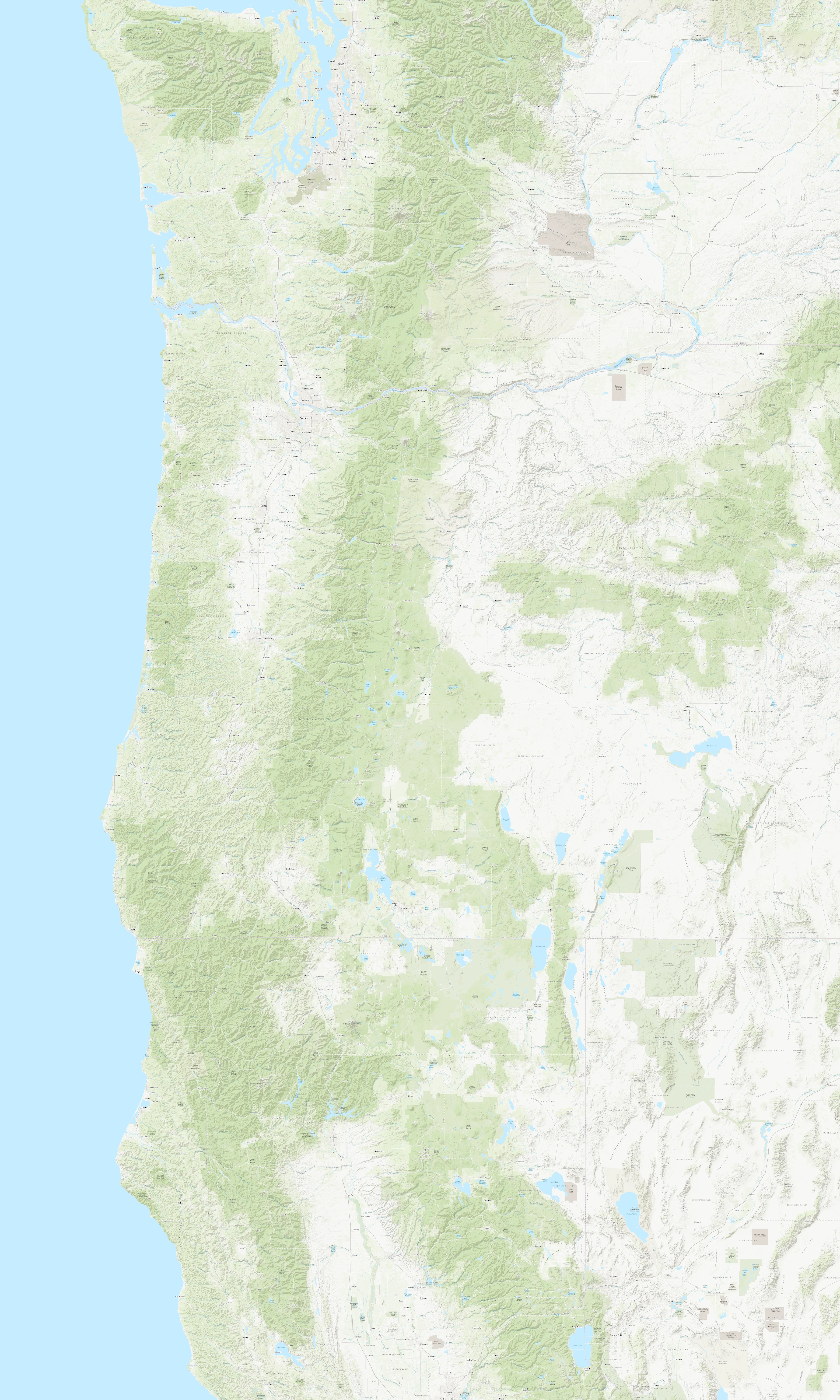
Esri topography · Modern regional map · Native resolution 3,600 × 6,000 pixels. Drag or swipe to explore; open the 1971 close-up for period contours and local detail.
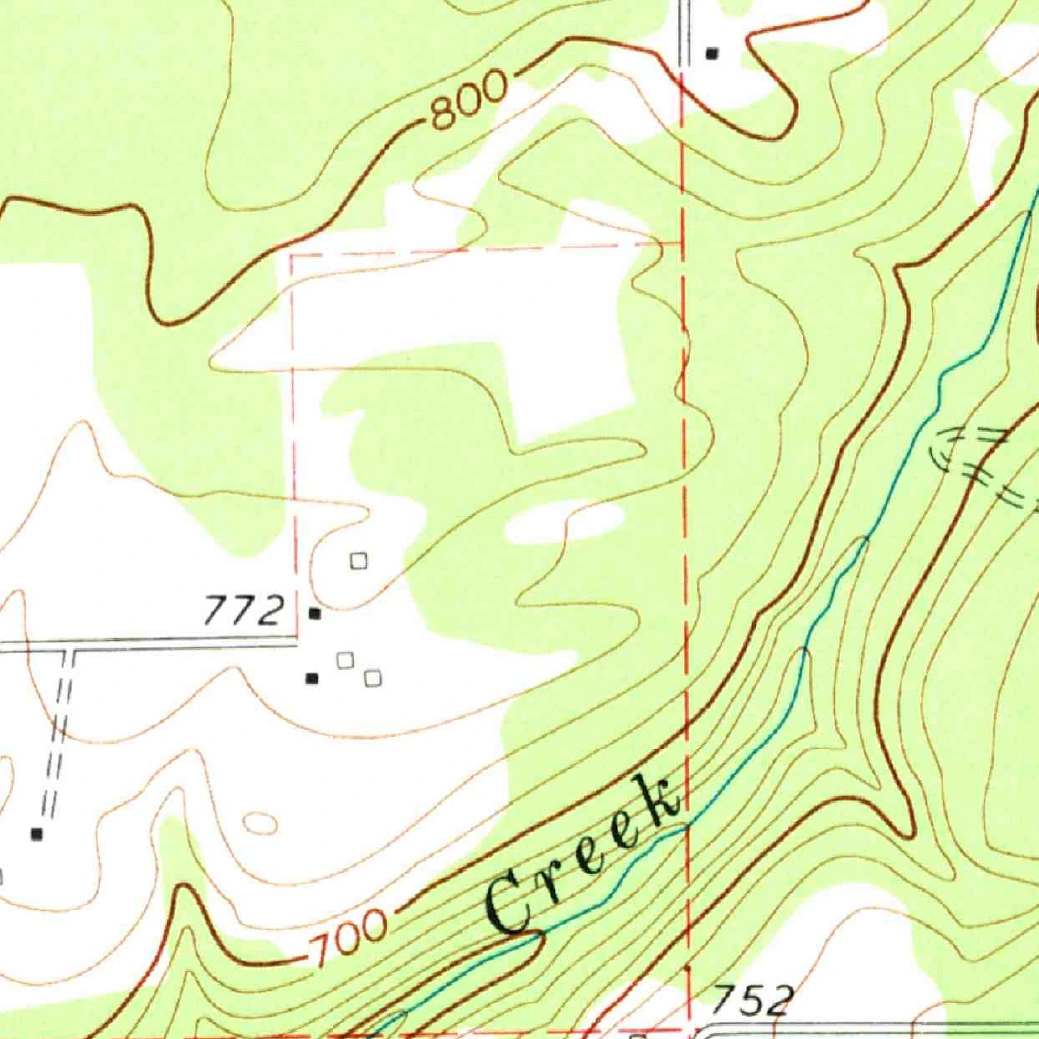
Ariel quadrangle · USGS · 1971 · 1,056 m square · 45.9000° N, 122.6000° W
Close to the ground
Possible shelter and a way out: mapped structures, road and access track, with a dotted route to explore.
Reference center
Road end
West along mapped road · beyond this sheet detail
N
500 ft
Zoom ref
After 8 p.m. · approx.Airborne · southbound after Seattle · position unknown
Airborne
SEA
PDX to SEA
PDX
Curb
What History Remembers
After 8 p.m. · approx.Airborne · southbound after Seattle · position unknown
Facts
Event
The FBI places Cooper’s disappearance a little after 8 p.m. on November 24, 1971, during the southbound flight after Seattle. His departure was not directly witnessed; the exact time and position remain estimates.
Weather
The FBI’s later account describes a cold, dark night with driving wind and rain across the estimated jump region.
Terrain & topography
Investigators estimated a region in southern Washington, north of Portland, with wooded terrain. No specific landing surface, elevation or impact site has been authenticated.
Closest roadways
The landing point and any road used afterward remain unknown. The X marks the archive’s estimated regional reference.
Evidence
Cooper was absent when the aircraft landed in Reno. In 1980, ransom bills found beside the Columbia River matched recorded serial numbers; this later discovery does not establish where he landed.
Witness accounts
The crew remained forward in the aircraft. His departure was inferred afterward, and no landing eyewitness has been established.
Theories & possible impact
The FBI considered a fatal jump plausible because of darkness, weather, unsuitable clothing and parachute limitations. A rough landing or drowning remains a possibility, not a proved cause of death; survival is also unconfirmed.
Before the disappearanceAirborne · southbound after Seattle
Facts
Event
Before the presumed exit, the crew remained forward while Cooper was in the rear of the aircraft. Crew accounts and investigative records describe the aft-stair sequence.
Rear-stair operation
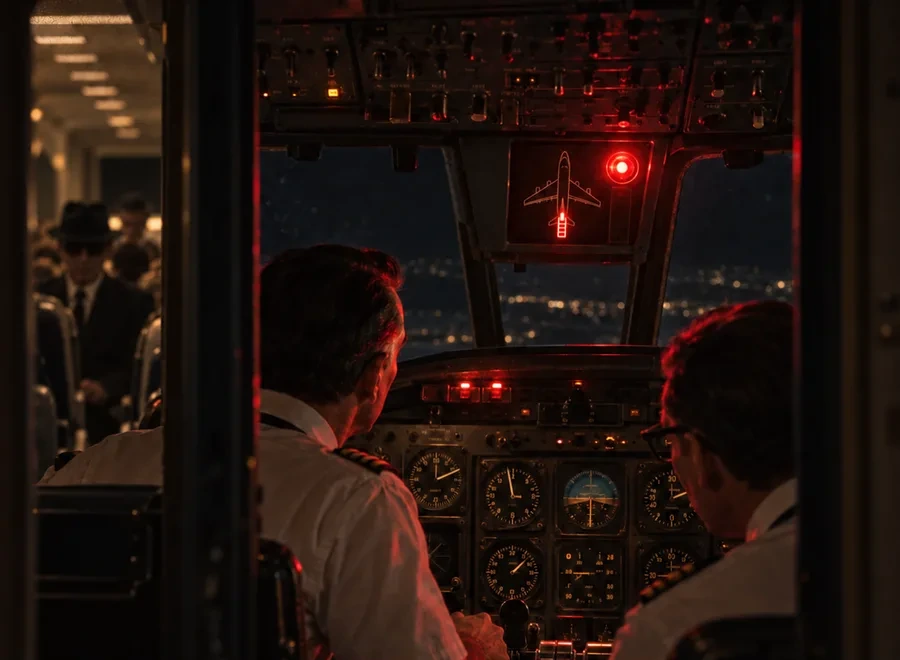
The rear door and stairway were operated from a panel in the rear cabin, not lowered by the pilots from the cockpit. The attendant showed Cooper the panel, its controls and the operating procedure.
Crew instructions
The attendant reported that Cooper later called because he could not get the stairs down. The pilot said he would level the aircraft and reduce airspeed; the crew remained forward.
Cockpit indication
The attendant’s interview describes a red light on the second officer’s panel indicating that the stairs had lowered.
Evidence
Released interviews document the controls demonstration, interphone calls and cockpit indication used to reconstruct the departure sequence.
Witness accounts
Tina Mucklow described showing the controls and later seeing the red indicator. The crew’s observations helped investigators estimate when Cooper left.
Theories & possible impact
Stair deployment and later aircraft movements helped investigators infer an exit. They do not establish the exact departure moment; lowering the stairs made an escape possible without proving a successful parachute descent.
What Cook Sees
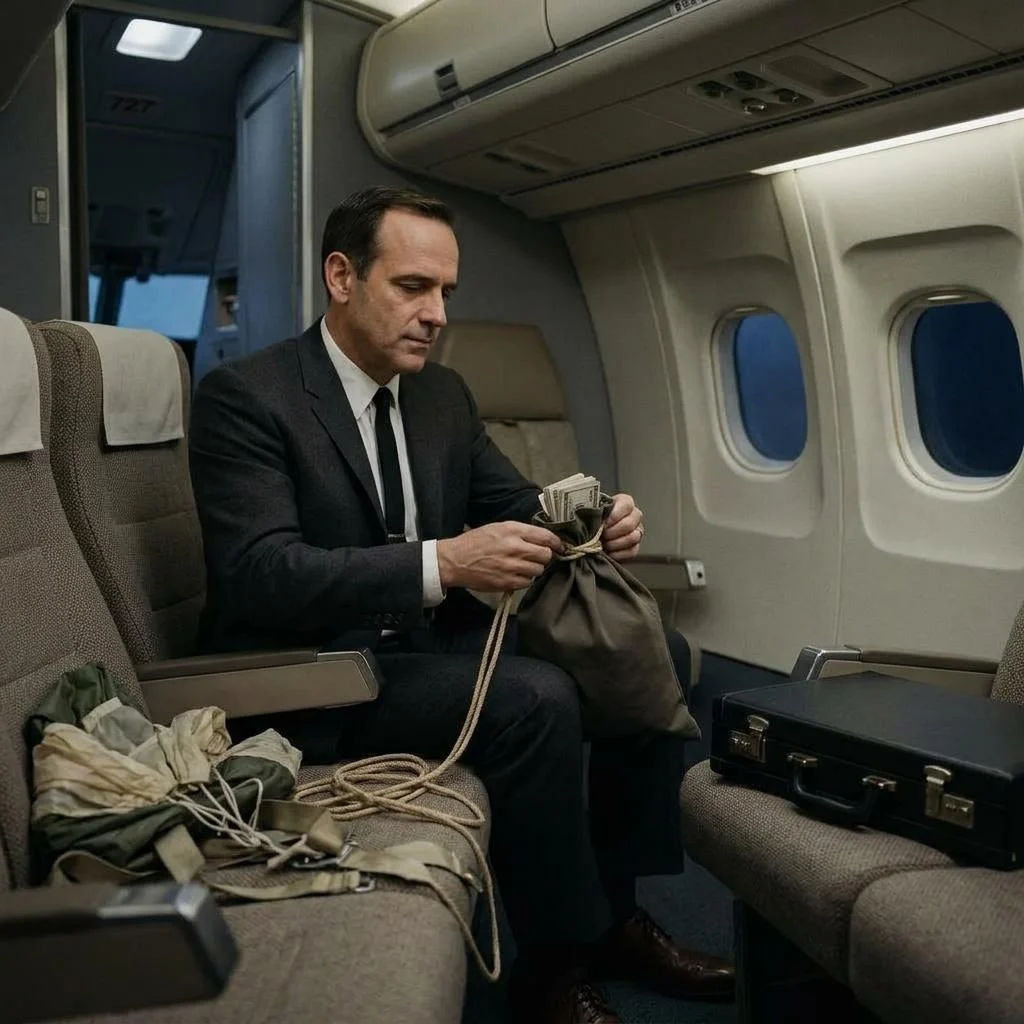
He sits calmly. Piecing together his trove. Trying it on. Feeling the weight. Steadying his feet. Bending his knees.
EveningAirborne · leaving Seattle
Facts
Event
After the Seattle exchange, Cooper used cord from another parachute to secure the ransom bag. Flight 305 departed southbound, ordered toward Mexico City.
Money bag
The attendant described a white canvas bag rather than the knapsack Cooper had requested. He tried arranging the money in parachute material before deciding to keep it in the canvas bag.
Cord wrapping
Her FBI interview says he cut pinkish nylon parachute cord with a pocketknife, wound it repeatedly around the bag’s neck, ran it around the bag from top to bottom, and formed a carrying loop at the top.
Attachment & equipment
Before going forward, the attendant saw nylon cord around his waist. One reserve he took was a sewn-shut training chute.
Evidence
The interview’s detailed wrapping account and parachute equipment left aboard support the improvised packing. No recovered bag or knot proves how the money was attached during the descent.
Witness accounts
Tina Mucklow saw the cord being cut and wrapped and described the bag’s neck, lengthwise turns and handle-like loop. Before moving forward, she saw cord around his waist.
Theories & possible impact
The improvised bag and missed training reserve led investigators to question his parachuting expertise. A badly secured load could complicate a descent, but loss of the bag, survival or death is unproved.
EveningSeattle · SEA · ground stop
Facts
Event
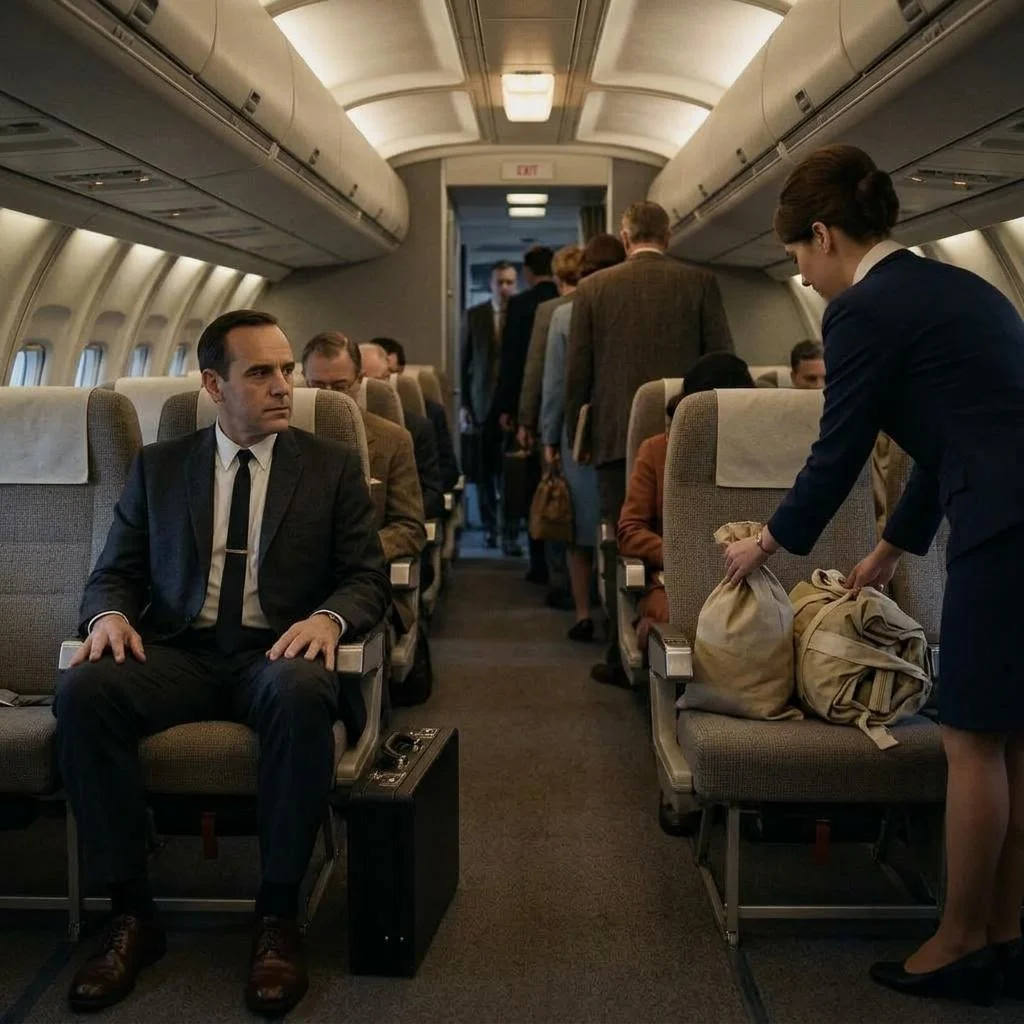
At Seattle–Tacoma Airport, Cooper exchanged the flight’s 36 passengers for $200,000 and four parachutes. Several crew members remained aboard for the next departure.
Ransom delivery
The attendant’s interview describes collecting a white canvas money bag through the forward door and carrying it past the seated passengers. Cooper checked it before allowing them to leave.
Parachute exchange
Four parachutes were supplied. The attendant made separate trips to bring the equipment aboard; the FBI later identified a training reserve among the chutes Cooper took.
Passenger release
The 36 passengers and two flight attendants were released. Tina Mucklow and the three cockpit crew continued on the southbound flight with Cooper.
Evidence
The ransom was supplied in twenty-dollar bills; its serial numbers later identified recovered money. The parachutes and retained equipment became investigative evidence.
Witness accounts
Mucklow described retrieving the money and parachutes and passing Cooper’s permission to release passengers to the pilot.
Theories & possible impact
One interpretation is that requesting multiple parachutes discouraged authorities from risking faulty equipment, since they might have feared a hostage would jump too.
AfternoonAirborne · Portland to Seattle
Facts
Event
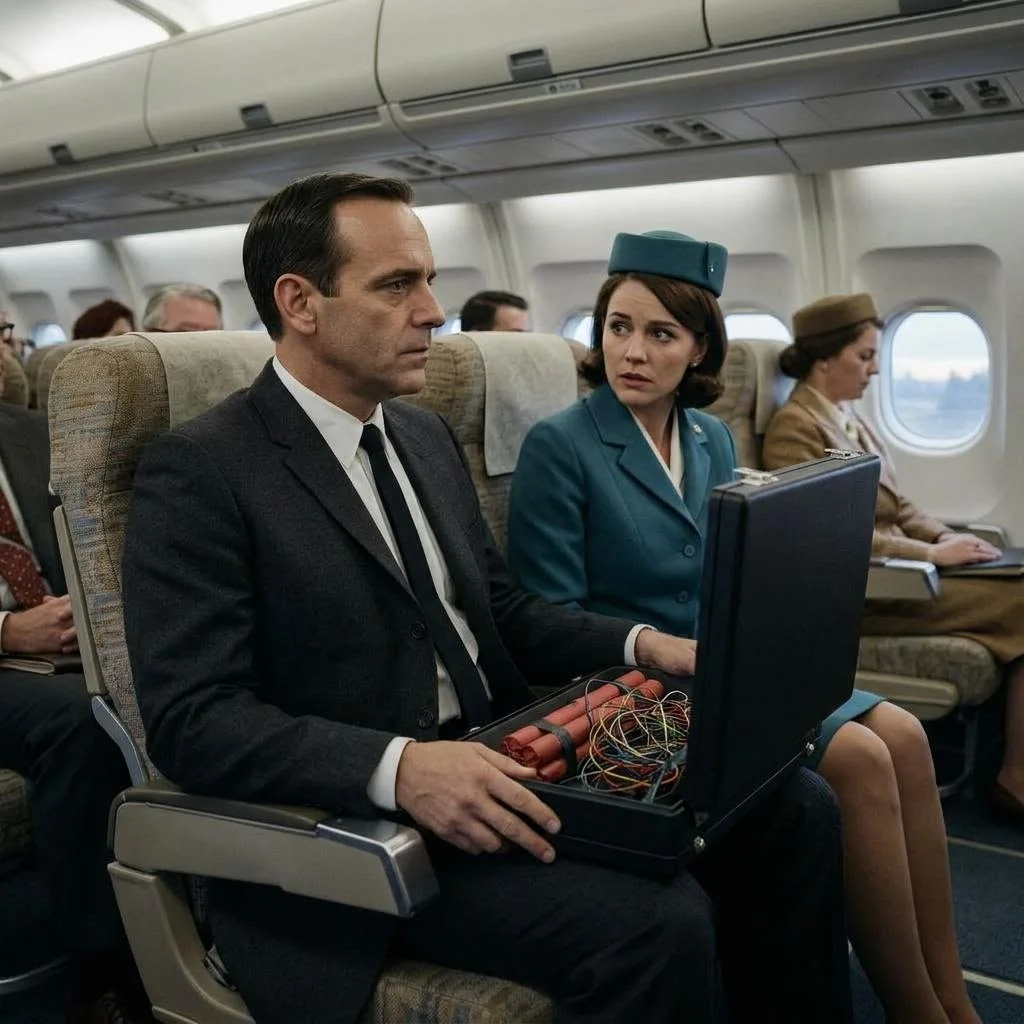
On the Portland–Seattle leg, Cooper partly opened an attaché case, showing wires and red-colored sticks. He demanded four parachutes and $200,000 in twenty-dollar bills.
Inside the case
The FBI’s case history describes visible wires and red-colored sticks in an inexpensive attaché case.
Ransom demand
He demanded $200,000 in twenty-dollar bills and four parachutes. The money and equipment were to be supplied at Seattle before the passengers were released.
Message to the captain
The attendant wrote down Cooper’s demands and carried the message to the captain. This written demand was separate from the first note Cooper handed her.
Evidence
The flight attendant’s account records the visible contents and the demands. The appearance of sticks and wires does not establish that the device was a working bomb.
Witness accounts
Florence Schaffner saw into the case; flight-attendant interviews describe the demands and communications with the cockpit.
Theories & possible impact
A real explosive and a bluff remain distinct possibilities. The perceived threat controlled the crew’s response; the device’s functioning and potential blast cannot be confirmed.
Shortly after 3 p.m.Airborne · Portland to Seattle
Facts
Event
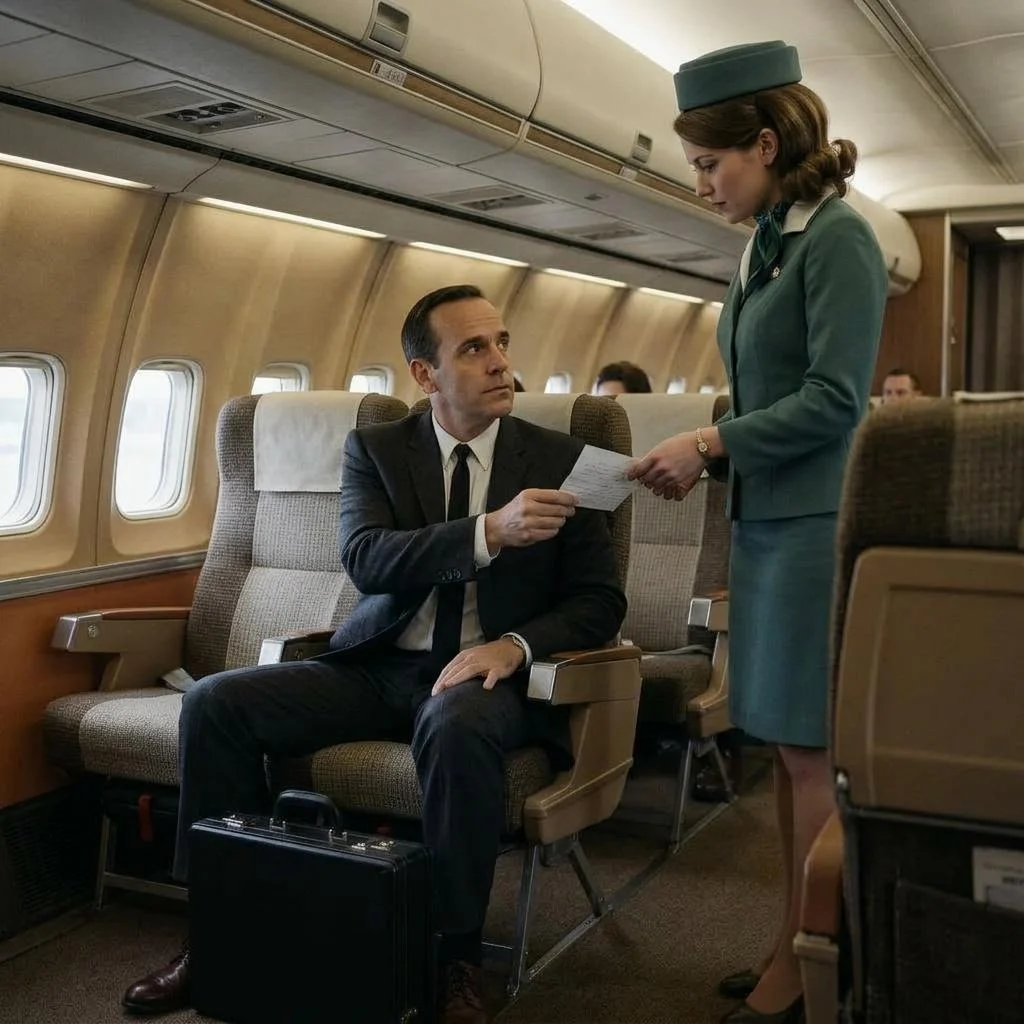
Shortly after 3 p.m., Cooper handed a flight attendant a note saying he had a bomb and asking her to sit beside him.
Text of the note
A released FBI witness interview records: “Miss — I have a bomb here and I would like you to sit by me.”
The attendant’s response
Florence Schaffner initially put the note away, then read it after Cooper drew her attention to it. She sat beside him and saw into the partly opened attaché case.
What followed
The first note announced the bomb threat and asked her to sit down. The subsequent demand for money and parachutes was relayed to the captain separately.
Evidence
The released interview and FBI case history preserve the reported message and the sequence of the handoff.
Witness accounts
Schaffner received and read the note, sat beside Cooper and reported the encounter in her interview.
Theories & possible impact
The note changed an ordinary flight into a reported bomb threat. Whether the threat could have been carried out and Cooper’s private motive remain unresolved.
AfternoonPortland · PDX · before takeoff
Facts
Event
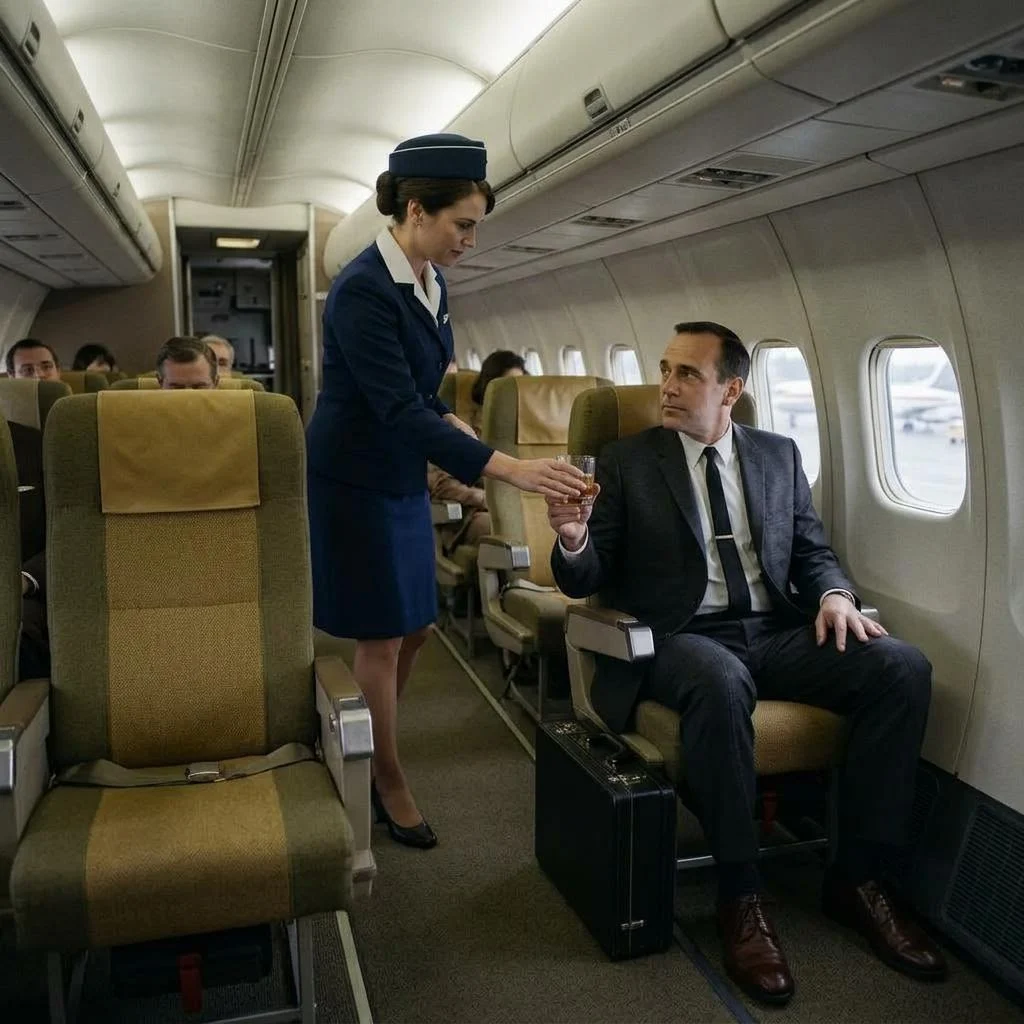
While waiting to take off at Portland, Cooper ordered bourbon and soda. The FBI describes a quiet man in his mid-40s, wearing a business suit, white shirt and black tie.
Clothing
Witnesses described a business suit, white shirt and black tie. The FBI identifies the tie later left aboard as a black J.C. Penney tie.
Drink & demeanor
The FBI records an order for bourbon and soda before takeoff and describes a quiet passenger.
Physical description
Two attendants’ estimates, quoted by the FBI, put him in his mid-40s, about 5 feet 10 inches to 6 feet tall, 170–180 pounds, with brown eyes.
Evidence
The drink order and clothing come from witness accounts. The black tie was later left aboard and retained as evidence.
Witness accounts
Two flight attendants later gave closely matching descriptions when interviewed separately.
Theories & possible impact
His quiet appearance helped define the witness description; it does not prove training, motive or a particular suspect. No threat or physical impact is established at the drink-order moment.
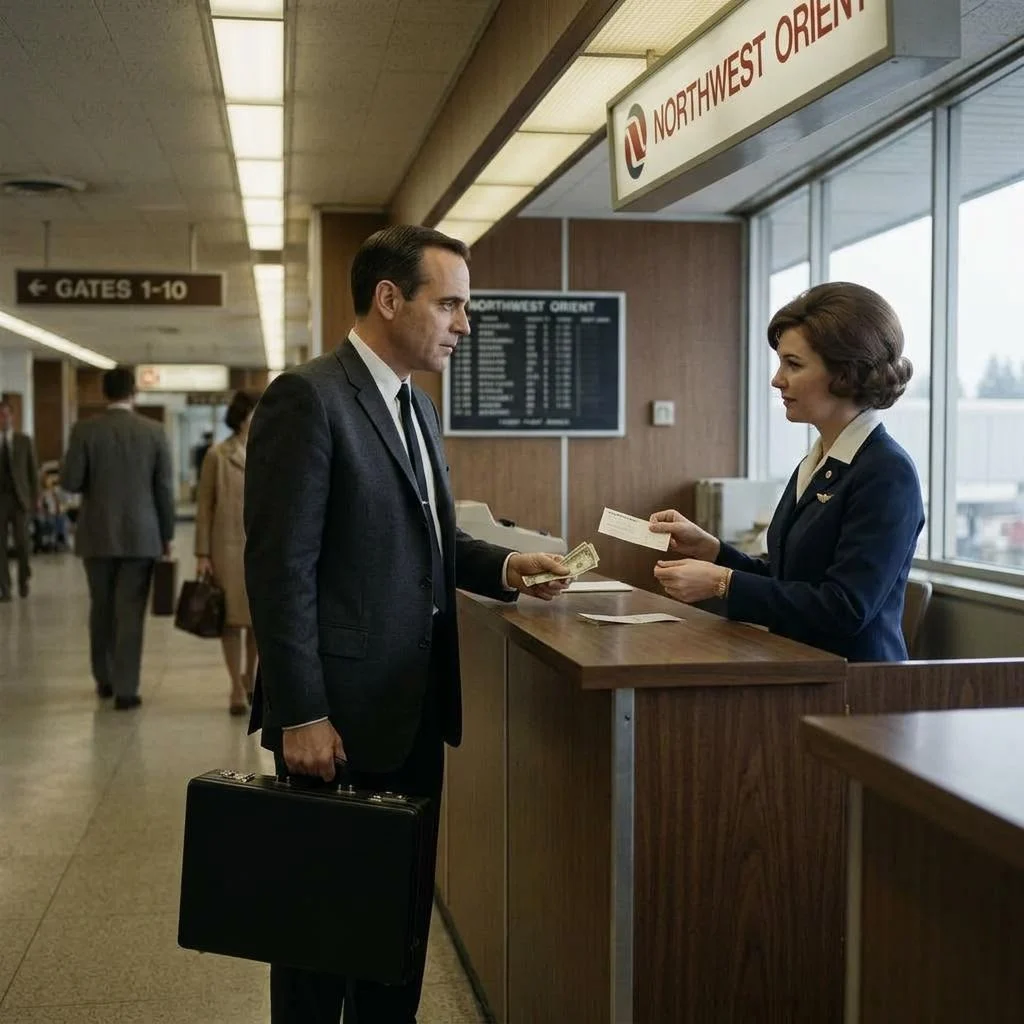
On November 24, 1971, a man using the name Dan Cooper paid cash at Northwest Orient’s Portland counter for a one-way ticket on Flight 305 to Seattle.
Name on the ticket
The name used was Dan Cooper. It is an alias associated with the transaction, not a verified legal name; D.B. became familiar through a reporting error.
Payment & destination
He paid cash for a one-way ticket on Northwest Orient Flight 305 from Portland to Seattle.
First documented contact
The FBI’s public chronology begins with the cash purchase at the Northwest Orient counter.
Evidence
The original Dan Cooper airline ticket survives in FBI custody.
Witness accounts
Ground witnesses who came into contact with Cooper contributed descriptions consistent with the flight attendants’ accounts, according to the FBI’s later summary.
Theories & possible impact
Dan Cooper was the name used to buy the ticket, not a proved identity. The familiar D.B. initials arose from a press error; this ordinary transaction preceded the reported threat.
Back across Portland airport
What Happened Before History Began Watching
Before the recordPortland · PDX · departures curb
What Cook sees
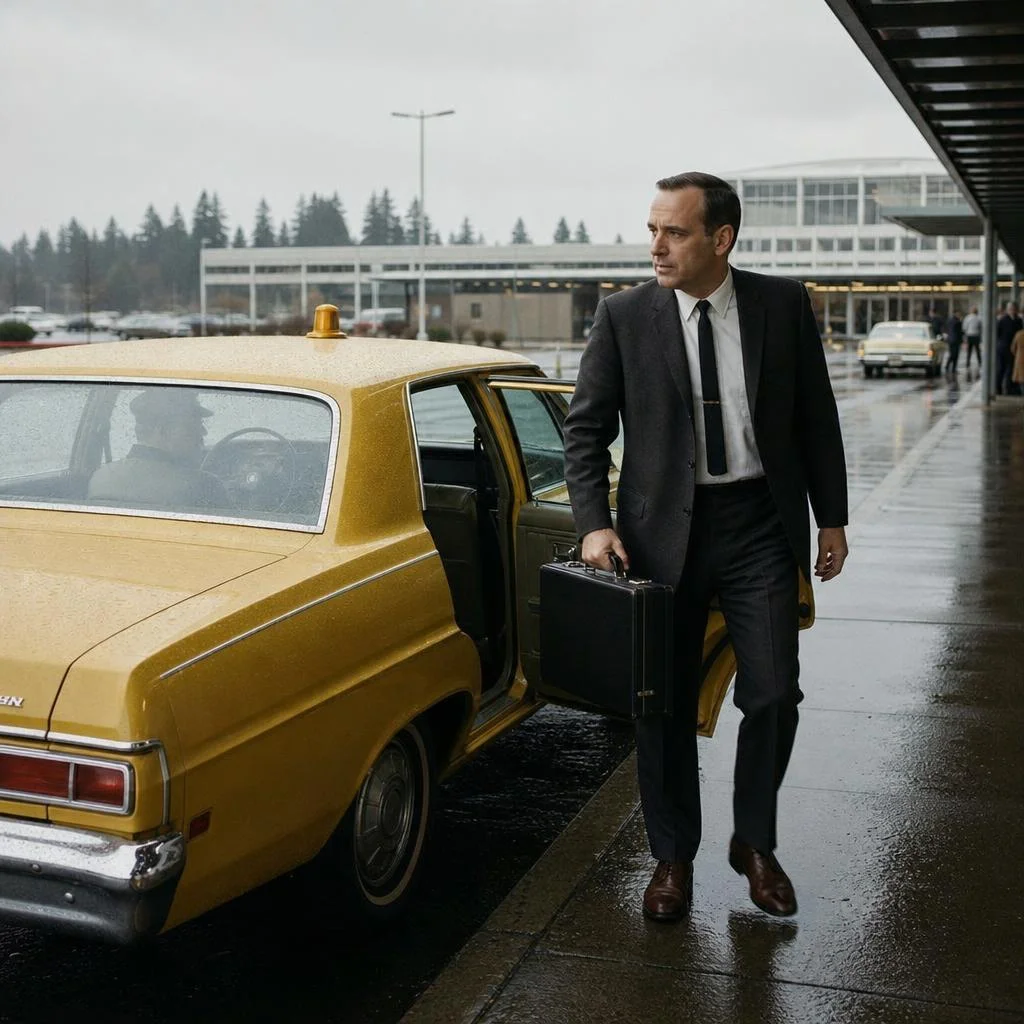
We reach the moment a man steps out of a cab at PDX. Then even that moment unwinds: the door opens, the dark case returns to the seat, and the stranger is back inside. Whatever mayhem lies ahead has not happened yet. He is as unknown to us as the driver.
Before the beginning
Back to innocence
Before the counter, before the name, before the note, the evening is ordinary.
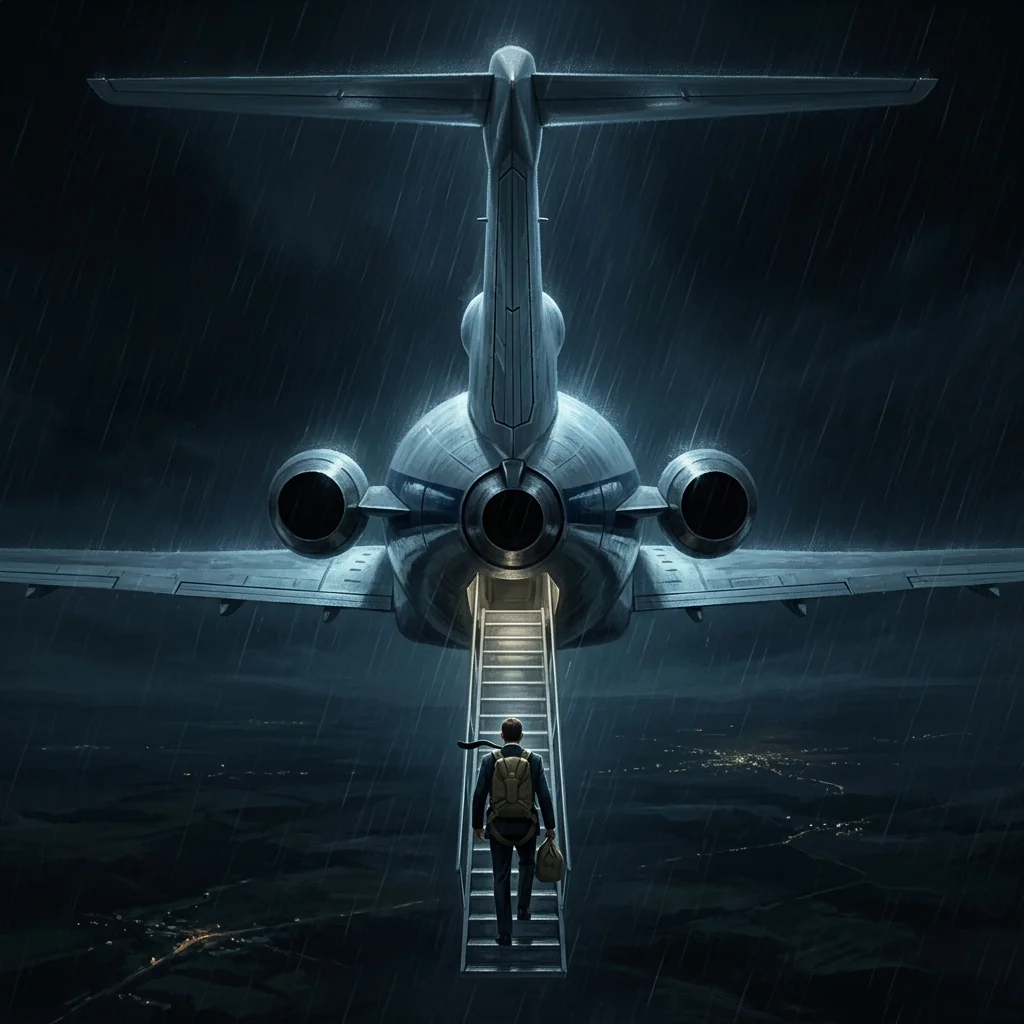
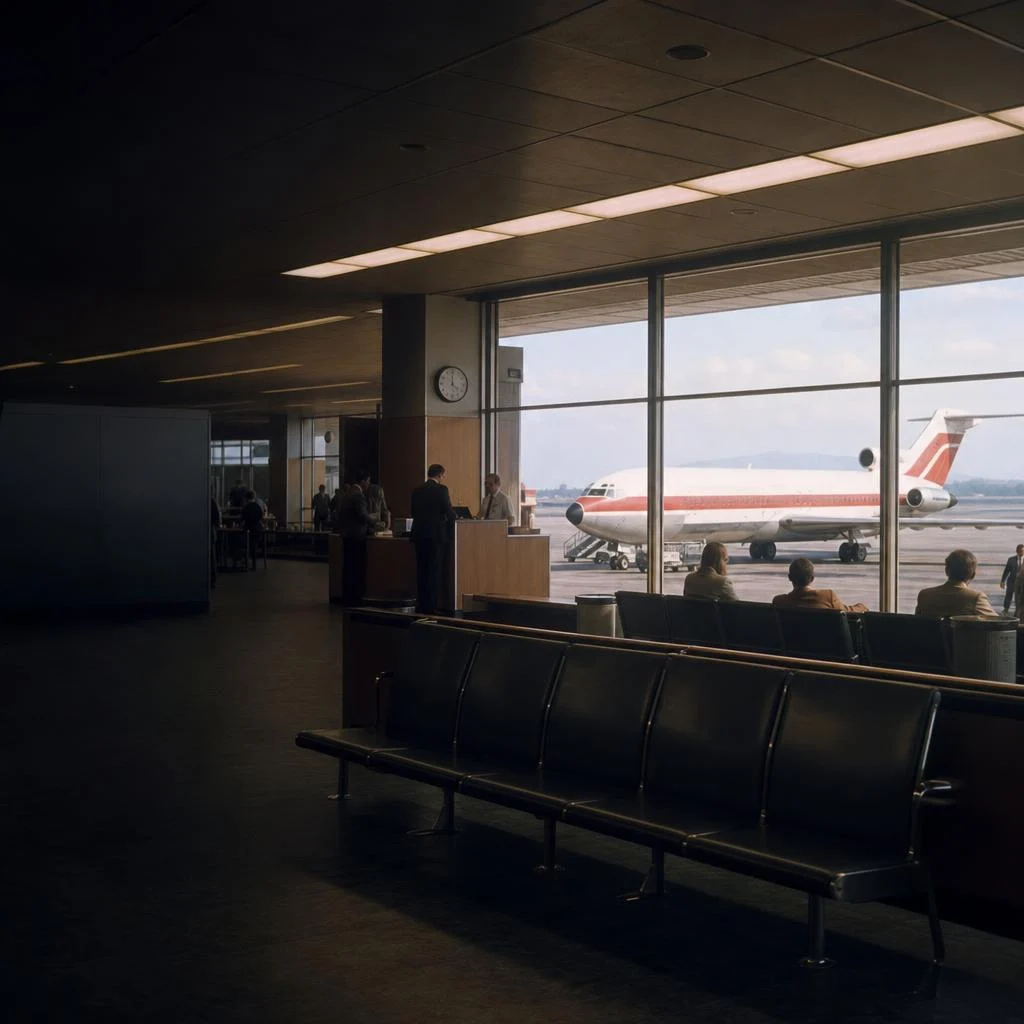
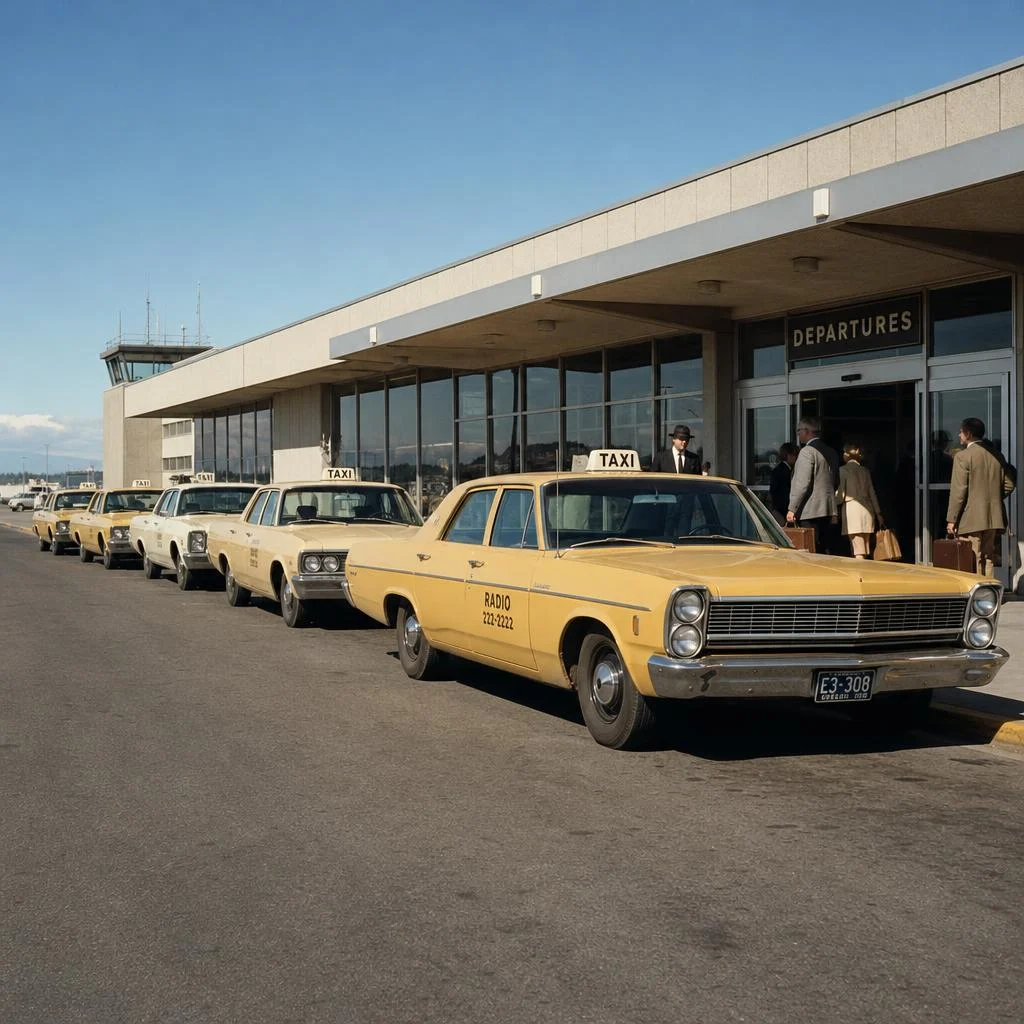
This is the era when a Boeing 727's rear stairs were an everyday convenience: a way to board from the apron, a door at the tail of a commercial flight.
After 1971, aircraft and airport security would change. Tonight, none of that has happened. The stairs are just stairs.
Seattle to Portland · Washington & Oregon · North is up
NASA / NOAA · VIIRS satellite composite · 2012, not 1971Imagery & X reference
NASA Earth Observatory / NOAA National Geophysical Data Center, Suomi NPP VIIRS city-lights composite, 2012. The X uses the same approximate archive reference as the aerial map (45.9° N, 122.6° W); no confirmed landing site is known. No road-map layer has been added. NASA GIBS source